Where the Wet Week Went: A Rain Walk Through a Cornish Garden

There is a particular sound a Cornish garden makes in November. It is not the gentle pitter-patter of garden writing. It is the thump of water leaving a roof in a hurry, the gurgle of a half-blocked gully, and the soft, apologetic squelch of a boot landing where a path used to be.
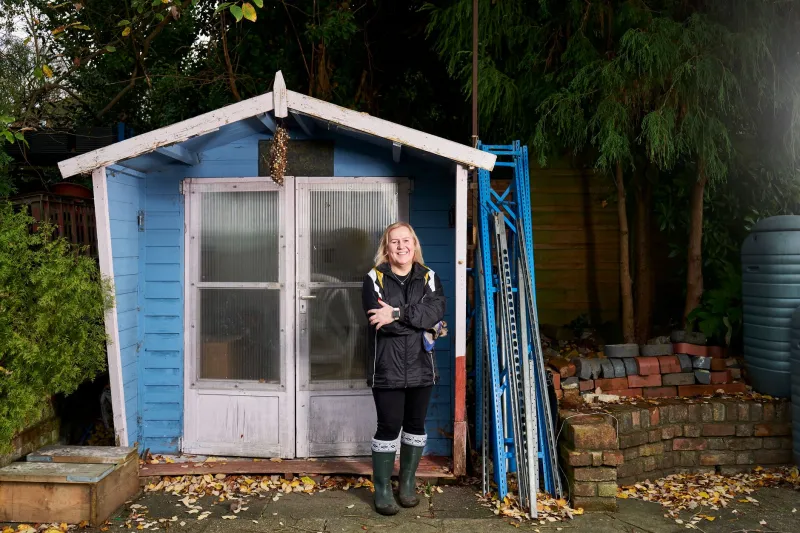
I spent a wet week this month following the rain around one garden near Grampound. The grower, a retired joiner called Merryn, had one request: do not call it a drainage problem. Call it a drainage story. Fair enough. By Friday, I had walked the same route four times and learned more about the plot from the water than from any plan.
Monday: the roof speaks first
The week began with a downpipe that emptied directly onto a gravel strip beside the shed. On a dry day, it looks tidy. On a wet one, it behaves like a small, enthusiastic fountain. Water hit the gravel, bounced, and ran along the wall before disappearing under a clipped box hedge.
Merryn shrugged. “That hedge has been drinking that roof for fifteen years,” he said. “It is also getting hollow underneath. One of these days it will sit down in the wet.”
This is the first lesson of the wet-week walk: water does not vanish because you cannot see it. It goes somewhere, and that somewhere is usually a plant, a wall or a neighbour’s boundary. A simple water butt would catch the first flush, but Merryn’s roof is old and the gutter is lumpy. Instead, he has a short length of plastic pipe that can be flipped to send winter rain into a shallow planted channel. It is not elegant. It works.
Wednesday: the path becomes a river
By midweek, the path from the gate had become a shallow stream. The cause was not the soil. It was the camber. The path falls towards the house for six metres, then flattens out beside the back door. Every bit of rain that lands on the upper garden arrives at that flat spot and stops.
Merryn has tried gravel. He has tried bark. He has tried a French drain, which he describes as “a hole I paid for.” The real fix, he now thinks, is to interrupt the journey. A single row of old bricks set slightly proud of the path, angled across the flow, pushes water sideways into a border of moisture-loving perennials. It looks deliberate rather than engineered, which is the point.
For UK gardeners with a similar slope, this is worth copying before reaching for a spade and a length of perforated pipe. Slow the water first. Spread it second. Only then think about carrying it away. A shallow swale — a grassy dip, really — can take a surprising amount of rain if it has somewhere to overflow to.
Friday: the butt tells the truth
By Friday, the water butt was full. So was the spare one behind the greenhouse, and the old dustbin Merryn uses for filling watering cans. Three containers, all brimming, and more rain due. This is the quiet arithmetic of a wet Cornish autumn: storage is useful, but it is never enough on its own.
Merryn’s answer is not more butts. It is a rain garden — a planted hollow at the lowest corner of the plot, about the size of a small dining table. It receives the overflow from the butts and the path, holds it for a few hours, and then drains slowly into the subsoil. In summer it is a patch of ragged sedge and moisture-loving iris. In winter it is briefly a pond, then a puddle, then a damp bed again.
“You have to choose plants that do not mind wet feet but can also survive a dry August,” he said. “That is the tricky bit. Nobody tells you that.”
The boggy corner that is not a problem
The far end of the garden has always been wet. Merryn used to think of it as the bad corner. Now he thinks of it as the garden’s sponge. It is planted with alder, willow and a thick skirt of ferns. It never looks tidy in the conventional sense, but it never floods the lawn either.
This is the shift in perspective that a wet week gives you. A boggy corner is not necessarily a fault in the design. It is information. It tells you where the water wants to go. If you fight it, you spend money on drains. If you work with it, you get a habitat, a water store and a reason to grow plants that would sulk elsewhere.
What to copy at home
You do not need a Cornish valley or a hundred metres of gutter to borrow from Merryn’s week. Start with a rainy day and a pair of boots. Walk the garden slowly and note where water leaves a downpipe, where it crosses a path, and where it sits. Look for the low point. Look for the stain on the wall. Look for the plant that is thriving while its neighbours rot.
Then make one small change. A water butt with an overflow directed into a border. A brick set across a path. A shallow planted dip instead of a gravel trap. Or simply a patch of bog plants where the lawn has given up. None of these will turn your plot into a reservoir. But they will make the next wet week feel less like an emergency and more like a conversation.
As Merryn put it, standing in the drizzle on Friday with a mug of tea and a soggy notebook: “The rain is going to come anyway. You might as well give it somewhere interesting to go.”