Creosote, Kettles and Half-Finished Ideas: Inside Three Cornish Garden Sheds
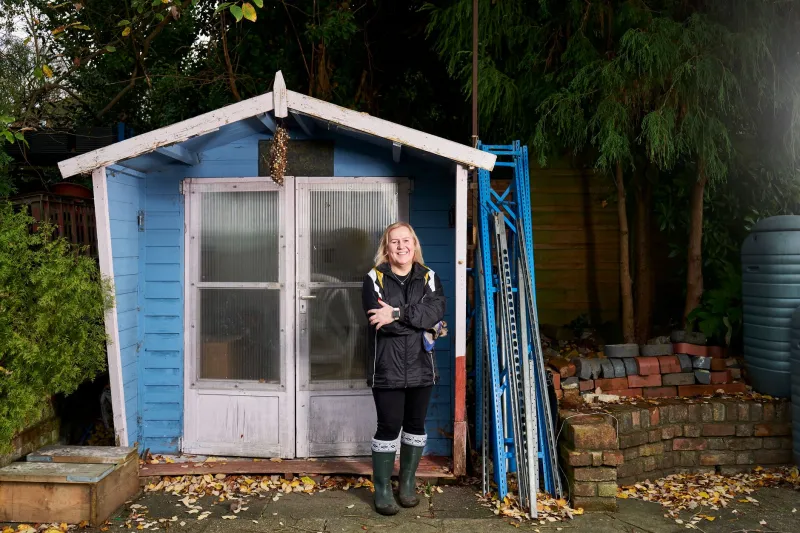
On a damp November morning, the most important building in a Cornish garden is usually the one you would not photograph for a magazine. The tin roof is furred with moss. The door sticks. There is a mug on the windowsill that has not been washed since the last dry spell. And yet, without it, the garden would stall.
A shed is not a shed in the way a sofa is not just a sofa. It is where the weather gets recorded, the secateurs get sharpened, the seed packets get argued over and the half-finished ideas get pinned to a beam with a rusty nail. In Cornwall, where mizzle can arrive sideways and the salt wind edits everything, the shed is less a luxury and more a piece of garden infrastructure.
We asked three growers from different corners of the county to talk us through their sheds. Not the polished, matchy-matchy kind. The real ones.
The shed as a weather station
Morwenna Pengelly runs a small nursery near Penryn. Her shed is a lean-to of corrugated tin, a secondhand window and a bench that has been repaired so many times it is more patch than timber. On the wall: a barometer, a rain gauge, a wind-up radio and a notebook with a pencil on a string.
'I check the shed before I check the garden,' she says. 'The notebook tells me what the garden has been doing while I was inside pretending to do paperwork.' She records rainfall, wind direction and the kind of small observations that never make it into a forecast: which way the puddles are leaning, whether the hedge is moving at the tips or all the way through. 'People buy fancy weather stations. I have a tin roof and a pencil. The roof tells me when it is hailing before I open the door.'
The lesson for UK gardeners is not to build a meteorological hub. It is to give the shed a job beyond storage. A hook for the rain gauge. A pencil by the door. A notebook that does not mind getting damp. Morwenna says the shed is where she notices things. 'You cannot see the garden properly if you are always in it. Sometimes you need to stand in a shed with a cup of tea and look out.'
The seed bank in a biscuit tin
Tom Hosking keeps an allotment near Redruth. His shed is part workshop, part tool hospital, part rodent-proof vault. An old filing cabinet holds seed packets in alphabetical order. A biscuit tin holds the ones he is particularly precious about. There is a jar of silica gel, a mouse trap that has never caught anything and a radio permanently tuned to a station that fades in and out with the weather.
'If I cannot find it in ten seconds, it is in the wrong shed,' he says. 'That sounds tidy. It is not tidy. It is just ruthless.' Tom's rule is that everything in the shed should either save him a trip to the house or save a tool from rust. Secateurs hang on a nail. Twine lives in a flowerpot. A sharpening stone sits in a saucer of oil. The seed packets are filed by year and by hope, which he says are not always the same thing.
His shed is not insulated. He does not want it to be. 'A shed that breathes is a shed that works. I have seen people seal them up and wonder why everything sweats. You want a dry shed, not a airtight one.' For UK gardeners tempted by the idea of a perfect potting shed, Tom's version is a useful corrective. A shed earns its keep through small, repeated actions: a labelled tin, a hook at the right height, a dry shelf for the things that matter. 'The shed should make the garden easier,' he says. 'If it makes it harder, you have built a cupboard, not a shed.'
The thinking bench
Ruthy Chenoweth grows vegetables and cut flowers near Helston. Her shed has a chair in it. Not a stool. A chair with a cushion that has seen better days. There is a kettle, a window with a view of a wet hedge and a shelf of half-finished ideas written on the backs of envelopes.
'Some of my best crop plans have happened while staring at that hedge,' she says. 'You cannot force a plan at a desk. You need a place where nothing is expected of you for ten minutes.' The shed is where she sorts seeds, labels dahlias and decides what to abandon. It is also where she keeps the tea stains. 'I could paint over them. But they are a record. That one is from the week I decided to stop growing brassicas in the wind tunnel. That one is from the morning I realised the polytunnel was in the wrong place.'
Ruthy's shed is the least organised of the three, and she is unrepentant. 'A shed should have a bit of nothing in it,' she says. 'A bit of space for an idea to land.' Her advice to gardeners who want a shed that works harder is not to add more shelves. It is to add a chair and a view. 'You need somewhere to sit that is not the house and not the bed. The garden looks different from a shed.'
What a Cornish shed knows about UK gardens
Cornwall is not the only place with weather, but it does have a particular way of testing a structure. Salt, wind, mizzle and the occasional proper gale will find every gap. The sheds that survive are rarely the most expensive ones. They are the ones that were built with a bit of give, repaired with whatever was to hand and kept in use.
That is the real lesson for UK gardeners. A shed does not need to be a statement. It needs to be a tool. It should keep the rain off the seed packets, the rust off the tools and the mud off the kitchen floor. It should have a hook for the kettle, a pencil for the weather and a chair for the thinking. The tin roof can wait.
As Morwenna puts it: 'The garden is the main event. The shed is the green room. You go in there to get ready, to have a cry, to drink tea and to go back out again.' That is not a bad job description for a small, scruffy building at the bottom of the plot.