Pockets, Bowls and Blue Knees: Mapping a Cornish Garden’s Cold Spots
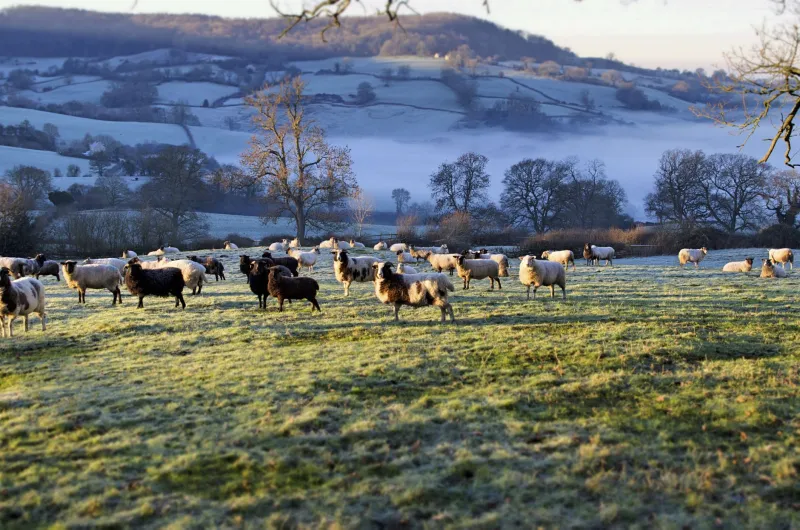
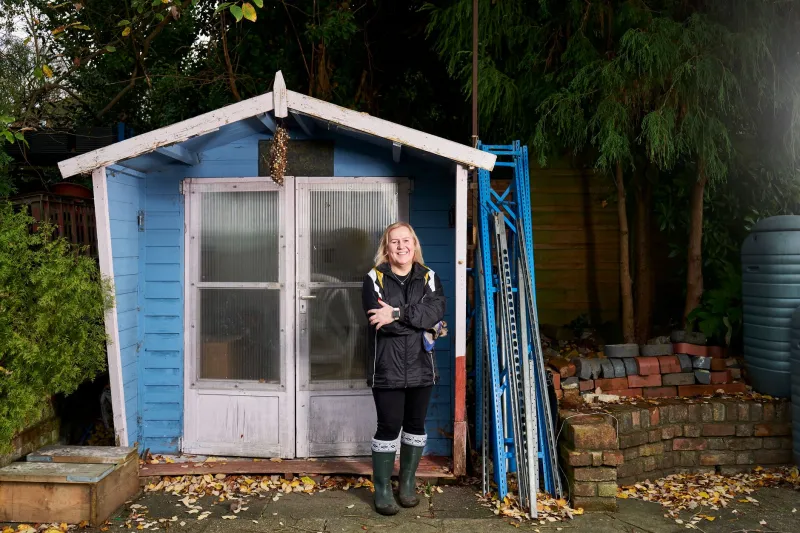
On a still morning near Constantine, the lawn had gone silver in patches. Not all over—just a low run behind the shed, a hollow by the gate, and a stripe where the hedge opens to the lane. Marion, who has gardened on this slope for years, didn’t reach for fleece. She reached for a notebook.
That notebook is the most useful garden tool she owns in November. It holds a hand-drawn map of her plot, marked with little crosses, arrows and notes like ‘cold sink—no camellia’ and ‘warm wall, 2°C up’. It is not a professional survey. It is a record of where the cold actually sits, rather than where she assumed it would.
Frost is not fair. It pools, gathers and slinks about according to slopes, walls, hedges and soil. In Cornwall, the sea keeps much of the county milder than inland Britain, but that can make the cold corners more deceptive. A garden can feel balmy by the gate and still hold a frost pocket behind the compost heap. Learning to read those places is less about fancy kit than about paying attention.
Cold air behaves like water
Cold air is heavier than mild air. On a calm night it slides downhill, collects behind barriers and settles in hollows. A garden that looks flat on a plan is, in weather terms, a landscape of basins and ridges.
Marion’s plot slopes gently towards a lane. The house and a stone wall sit at the top, a mixed hedge runs along one side, and a low fence opens to the road. On paper it looks sheltered. In reality, cold air drains down the slope, slips through the gate gap and pools in the dip beyond the shed. That dip is where her early daffodils sulk and where the grass stays white long after the rest has thawed.
She calls it the bowl. Not a technical term, but a good one. Fog collects there too, sitting in the dip like milk in a saucer while the higher lawn is clear. That is the other clue: a fog bowl in the morning often becomes a frost pocket by night.
A cheap thermometer and a notebook
You do not need a weather station. Marion uses a handful of cheap min-max thermometers, the kind sold for greenhouses and cold frames. She places them at different heights—one near grass level, one at knee height, one higher up—and checks them at breakfast before the day warms.
‘The grass-level one is the honest one,’ she says. ‘That’s where the seedlings and the hellebore buds are.’
Her method is simple. For two or three weeks in late autumn, she records the overnight minimum at each point, along with a quick note on the morning: clear, cloudy, windy, foggy, frosty. The readings do not have to be laboratory-perfect. A degree or two of difference is enough to show where cold air lingers.
She also writes down what she sees. Moss on the shaded lawn. Algae in a damp hollow. A patch of grass that stays silver after the sun has reached the rest of the garden. Frost on the roof of the shed but not on the house. These are free instruments, and they have been recording the garden’s weather for years.
What moss and fog can tell you
Moss is not just a sign of damp. In a cold garden it often marks the places that stay cooler and wetter for longer. That can be useful if you are planting ferns or moisture-loving natives, but less useful if you are trying to grow something tender.
Fog is even more revealing. On a calm morning, watch where it forms and where it clears last. Low ground, blocked corners and places with still air will hold mist. A fog bowl is a cold bowl. If the mist sits in the same spot on three different mornings, treat it as a fact, not a coincidence.
Marion also looks at where the frost melts first. A wall that catches the morning sun, a paved patio, a raised bed with good drainage, a spot near a house window—these can be surprisingly warm. Not tropical, but warm enough to make a difference to a young plant or an early flower.
Drawing the map
After a week or so, Marion sketches the garden from memory—beds, paths, walls, hedges, the slope—and colours in the zones. Blue for the cold bowl. Yellow for the warm wall. Green for the ordinary middle ground. Then she repeats the exercise after a windy night and a wet night, because the map is not fixed.
Her advice to anyone doing the same is to keep the sketch rough and the notes honest. ‘Don’t tidy it up,’ she says. ‘The messy version is the true one.’
A few practical points help. Put thermometers where they will not be knocked or soaked. Read them at the same time each morning. Note the wind direction, because a frost pocket in still air may behave differently when the wind blows. And do not trust a single morning. A garden’s cold corners reveal themselves over weeks, not hours.
Putting the map to work
Once you know where the cold sits, planting decisions become easier. Tender shrubs and half-hardy perennials can go in the warm spots—against a sunlit wall, on a raised bed, in a sheltered corner that catches the morning sun. Early-flowering plants can be moved out of the lowest hollows, or given a cloche or fleece when a sharp night is forecast.
It works the other way, too. A cold pocket is not a failure. It can be the right place for plants that need a proper winter chill, or for spring bulbs that are happy to wait. The trick is to stop fighting the garden’s own weather map and start using it.
Marion has already moved a pot of agapanthus from the bowl to the warm wall, and shifted her earliest daffodils to a raised bed that drains and thaws faster. The shed dip is now planted with ferns and hardy geraniums that do not mind a cold night. ‘It’s not a bad corner,’ she says. ‘It’s just a corner that needed reading.’
As hedges grow and trees fill out, the map will change. Cold air will find new routes. But the habit of looking—at moss, fog, silver grass and a cheap thermometer—will keep paying off. In a Cornish garden, the weather is never just weather. It is a pattern on the ground, waiting to be noticed.