The Borrowed Border: What Cornwall’s Railway Platform Gardens Teach Us
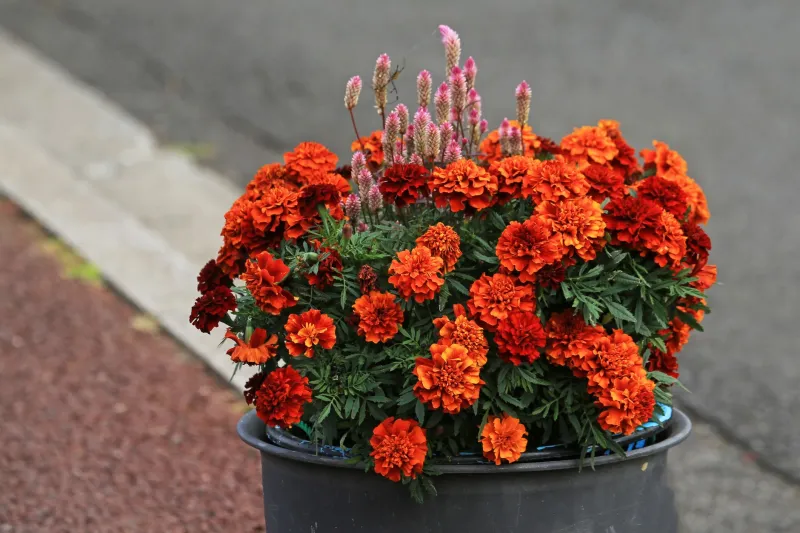
The 10:14 is late, which gives me time to inspect the border. It runs along the back of the platform, a narrow strip between fence and tarmac, and in the flat grey light of a Cornish November it is doing something quietly impressive. Seedheads have been left standing, a few late flowers are still hanging on, and a low silver mound of something tough and drought-proof is doing its best to look as if nobody has ever fussed over it. A volunteer in a high-vis vest is working along the strip with secateurs, cutting back just enough to keep the platform tidy and the plants in proportion. This is gardening in public, with all the compromises that implies.
Cornwall’s branch lines are full of these small acts of horticulture. The St Ives Bay Line, the Looe Valley Line, the Maritime Line to Falmouth and the Tamar Valley Line all have stations where someone has decided that a patch of gravel, a trough or a strip of platform edge could be more than just railway furniture. Some are no bigger than a couple of pots. Others have long borders, spring bulbs, wildflower edges and the kind of local sign that tells you which primary school planted the sunflowers. They are not show gardens. They are better than that: they are gardens people actually pass through.
A garden with a very specific brief
Station gardening is not like making a border at home. The brief is written by the railway, and it is less about colour schemes than about safety. Nothing can obscure a signal, a sign, a CCTV camera or a sightline. Nothing thorny should lean into a handrail. Nothing should create a trip hazard on a platform or block a doorway. Planting near the track needs permission, and volunteers have to work within the rules of the station adoption scheme and the community rail partnership that supports it. The result is a kind of gardening that has to keep its manners. It can be lovely, but it cannot be louche.
At home you can plant a huge cardoon in the middle of the path and call it structure. On a platform, that cardoon is a health and safety meeting. The volunteers learn to work with the grain of the place: a narrow border, a bright container, a wildflower edge kept low and safe. They also learn to compromise. A plant that would be allowed to sprawl in a private garden has to be staked, cut back or moved. The garden is shared, and that changes everything.
Wind, salt and the timetable
Then there is the weather. Coastal branch lines funnel wind. Salt arrives on the breeze. Platform surfaces can bake in summer and stand in cold shade in winter. Watering is rarely convenient, and the volunteer may be working in the gap between two trains rather than a leisurely Sunday afternoon. That shapes the planting. Tough, drought-tolerant plants earn their place: lavender, rosemary, sedum, thrift, hardy geraniums, grasses and spring bulbs that can be left alone for most of the year. Volunteers often use containers or raised beds where digging is not possible, and mulch with gravel to keep maintenance down. It is the same lesson any exposed UK garden teaches, just delivered with a timetable.
There is also the small matter of footfall. A station border is not a quiet herbaceous border. It is brushed past by commuters, tested by children, used as a windbreak by people waiting for a connection. Plants need to be robust without being boring. They need to recover from a scuffed edge or a dropped rucksack. In practice, that means avoiding the fragile and the fussy, and choosing plants that look good for longer than a fortnight.
Plants that can cope with an audience
Public planting also has to read quickly. A station border is seen by people who are not gardeners, not looking for it, and often moving. That means bold repeats, a clear season of interest and plants that look good even when they are not in flower. Bulbs are perfect: daffodils in February, alliums in May, crocuses in a trough. So are grasses that catch the light and seedheads that hold their shape into winter. The volunteers I speak to are ruthless about thugs. Nobody wants a plant that swallows the sign or flops over the platform edge. They favour the modest and the reliable, and they edit hard. In a public space, restraint is not a style choice; it is part of the job.
This is where station gardens differ from the grand Cornish gardens that draw visitors from far away. There is no walled garden, no team of gardeners, no carefully managed microclimate. There is a strip of ground beside a fence and a group of people who have decided to make something of it. The scale is small, but the ambition is not. A station garden can give a town a bit of identity, welcome a visitor, soften a journey and provide a tiny habitat for insects. It can also be a useful reminder that gardens do not have to be private to matter.
What public gardening asks of you
Gardening in a borrowed space asks for a different temperament. You are not the sole author. People will comment, litter will arrive, a bench may be moved, and the wind will do what it likes. Volunteers need to be diplomats as much as plantspeople. They negotiate with station staff, keep records, order plants, organise watering rotas and accept that some years will be better than others. The small scale is the point. A station garden does not need to be a masterpiece. It needs to be a sign that someone cares, a bit of colour on a wet morning, a place where a child might spot a bee while waiting for a train.
For UK gardeners, there is a broader lesson here. Many of us garden in borrowed or shared spaces: a front strip beside a pavement, a communal border, a window box above a street, a patch outside a workplace. These places come with constraints that can feel frustrating. But constraints can also sharpen the design. They force you to choose plants that will survive, to think about how a border looks from a distance, and to accept that perfection is not the goal. Resilience and generosity are.
The small dividends
By the time the train arrives, the volunteer has filled a bucket with spent stems and the border looks somehow both tidier and wilder. A few late flowers are still there. The silver mound has survived another year. It is a modest sort of gardening, easy to overlook, but it carries a useful lesson for anyone with a front garden, a window box or a shared patch of pavement. Beauty in public places is rarely about having the perfect site. It is about reading the constraints, choosing plants that can take them, and being willing to turn up again next week.
As the train pulls away, I can see another station garden coming up on the other side of the track: a strip of green, a few bulbs, a bench. It is not a grand Cornish garden. But it is doing the same work, in its own small way, for anyone who happens to be passing.