White Petals, Wet Feet: A Cornish Guide to Early Hellebores
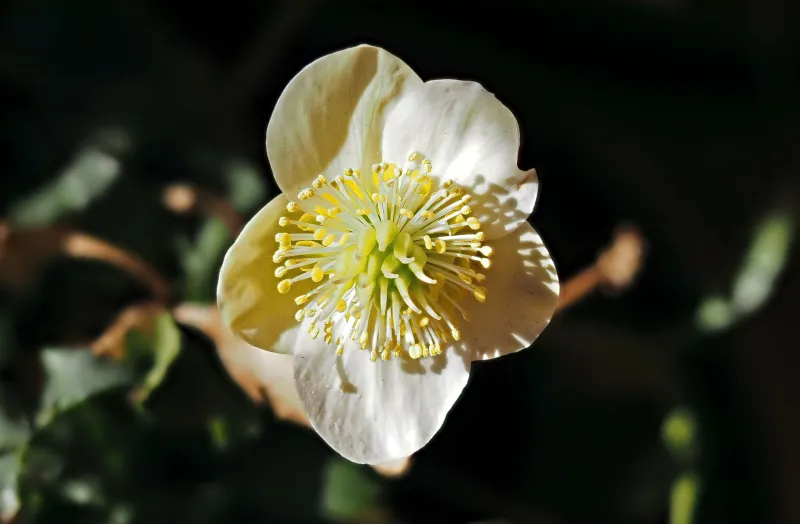
On a grey morning in early November, the lanes outside Truro are doing what lanes outside Truro do best: holding water. At a small specialist nursery tucked behind a windblown hedge, the first Christmas roses are already open. Not a whole bank of them — just a few white cups, nodding under the drizzle like someone trying to read a map in the rain. It is a modest start, but it is the start.
“People think Christmas rose means Christmas Day,” says Anna, who has grown hellebores here for the best part of two decades. “In Cornwall, it often means mid-November. If the autumn has been mild and wet, Helleborus niger can be flowering before the last leaves are off the sycamore.”
That early start is the reason for this visit. Cornwall’s winters are not cold by UK standards, but they are wet, windy and frequently grey. For hellebores, that combination is both a gift and a test. The gift is mild soil and a long growing season. The test is drainage, slugs and the sort of persistent damp that can turn a promising crown into a soggy disappointment.
At the Nursery: Buds Before Baubles
Anna’s stock beds are not the tidy rows you might imagine. They sit under a loose canopy of hazel and old apple trees, with leaf mould worked into the soil and grit dusted around the crowns like coarse sugar on a cake. Most of the plants are labelled, but a few have been rehomed by self-seeding, appearing in the gravel path or between the feet of a wooden bench.
“Hellebores are honest plants,” she says. “They tell you quite quickly if they’re happy. The ones in the wet hollow are smaller and sulkier. The ones on the slight slope, with leaf mould and shade, are already in bud.”
The earliest performer in her collection is a clump of Helleborus niger ‘Praecox’, a selection prized for flowering in late autumn and early winter. Nearby, Helleborus niger ‘White Magic’ is later but bears larger, clearer white flowers. Among the hybrids, ‘Josef Lemper’ is showing the first fat buds — creamy white, outward-facing and remarkably robust in the rain. ‘HGC Jacob’ is another early favourite, compact and free-flowering, while the Ice N Roses series is represented by a few promising plants that Anna rates for their willingness to flower through the worst of the weather.
“I don’t promise anyone a flower on Christmas Day,” she says, laughing. “Gardening is not a delivery service. But if you choose the right hellebore and plant it well, you can have white flowers from November into February. That’s a good enough Christmas present.”
Three Gardens, One Wet Winter
The nursery is only part of the story. Hellebores are often sold as shade plants, but in Cornwall the shade is frequently wet shade. To see how they cope, I visit three gardens that share the same mild, damp winter but handle it in different ways.
The first is a coastal garden near Falmouth, where salt-laden wind prunes everything whether you ask it to or not. Here, hellebores are planted behind a low bank of Pittosporum and ferns, sheltered enough to keep their flowers from being shredded but open enough to catch winter light. The owner, Margaret, grows them in raised beds edged with granite. “The ground is heavy clay,” she says. “Without the raised beds, the crowns would sit in water all winter. I learned that the expensive way.”
The second garden sits in a wooded valley near Lostwithiel. It is the sort of place where moss colonises the car before you have finished unloading the shopping. Hellebores are scattered through a bluebell wood, planted on small mounds of leaf mould and grit. The flowers are later here, but they last longer, protected from wind by the trees. The owner, Rob, rarely waters and never feeds. “The leaves do the work,” he says, pointing to a carpet of last year’s oak and beech leaves. “I just keep the crowns clear and let the worms tuck everything in.”
The third is a small town garden in Penryn, barely larger than a parking space. The hellebores grow in pots by the back door, positioned where they can be seen from the kitchen window. The owner, Sian, admits she bought them on impulse at a winter market. “I thought they’d be fussy,” she says. “But they’ve been fine in a gritty mix, and I move the pots under the eaves when the rain gets ridiculous.”
What the Growers Agree On
Across all three gardens and the nursery, the advice repeats itself in different words. Hellebores want a site that is shady for part of the day but not gloomy all winter. They want soil that holds moisture without staying waterlogged. They want the crown — the point where the stems emerge — sitting at or just above soil level, not buried. And they want a mulch of leaf mould or well-rotted garden compost, laid around the plant rather than over it.
“The biggest mistake is planting them too deep,” Anna says. “People treat them like roses and bury the graft. There is no graft, but there is a crown, and if it sits in wet soil it will rot. Plant it high, mulch around it, and let the roots go down to find the moisture.”
Slugs are the other shared complaint. In a damp Cornish winter, hellebore buds and young leaves are a delicacy. The growers are divided on method but united on timing. Sian uses night patrols with a torch and a pair of tweezers — “not glamorous, but effective.” Margaret relies on nematodes in autumn and encourages frogs with a small pond. Rob does very little and accepts some damage. Anna uses ferric phosphate pellets sparingly around the most precious plants, and keeps gravel clear of damp hiding places.
“You don’t need to be perfect,” she says. “You just need to notice. If the buds are being eaten, act. If the crown is sitting wet, lift it. Hellebores are forgiving if you pay attention.”
Choosing for a Cornish Winter
For UK gardeners who share Cornwall’s wet winters — and that includes much of the west, the south-west and many coastal gardens elsewhere — the safest starting point is Helleborus niger and its hybrids. They are early, white and often beautifully simple, though they can be fussy about drainage. Helleborus x ericsmithii hybrids, such as ‘Pink Frost’, combine niger blood with tougher parents and tend to be more resilient in wet soil. Helleborus orientalis hybrids, the Lenten roses, flower later but are generally more tolerant of a range of conditions, making them a good companion for the Christmas roses rather than a replacement.
Anna’s advice is to buy in flower if you can. “You see exactly what you’re getting,” she says. “Hellebores vary so much from seed. A plant in flower tells you its colour, its shape and its timing. That matters more than a label.”
As I leave the nursery, the rain has eased. The first Christmas roses are still nodding by the path, their white sepals marked with the faint green and pink that makes them look less like ornaments and more like something grown. They will not last forever. None of it does. But they are here now, in the wet and the grey, doing what Cornwall asks of its plants: getting on with it.
For anyone planting this month, the message is simple. Choose an early hellebore, plant it high, mulch with leaf mould, keep an eye on the slugs, and let the rain do the rest. The flowers will come when they come — and in the far west, that is often sooner than you think.