First Stems, Last Gamble: November with a Cornish Daffodil Grower
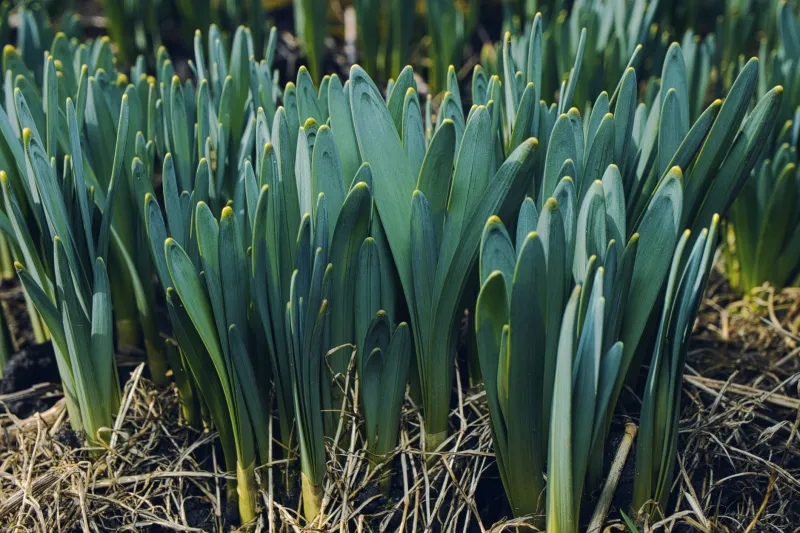
On a grey November morning near Grampound, the fields look more like neat vegetable beds than flower farms. Rows of raised soil run towards a hedge, and a small team is lifting, sorting and replanting bulbs while the light stays low. This is the quiet end of one season and the beginning of another. By February, these same rows should be carrying some of the first UK-cut daffodils of the year; by March, they will be a yellowness you can see from the lane.
I have come to meet a family who have grown daffodils on this patch of Cornish countryside for three generations. Their operation is small by commercial standards, but the timing is everything. Cornwall's mild, maritime climate gives them a head start on most of Britain, and the earliest stems are a useful bridge between the dark days of January and the spring flush that follows.
The field before the flowers
In November, there is no colour to speak of. The work is practical: lift crowded bulbs, grade them, clean out weeds, improve drainage and replant. The soil here is free-draining and light, which suits daffodils, but it also means the bulbs are at the mercy of the weather. A wet autumn can leave the ground too soft to work. A dry spell can make the ridges dusty. The team watches the forecast as closely as they watch the rows.
The bulbs themselves are the quiet engine of the year. They need a cold period to trigger strong growth, but not a punishing freeze. In Cornwall, the risk is rarely deep frost; it is more often wind, rain and a warm spell that pushes stems too early. The grower tells me that daffodils are tougher than they look, but they are not predictable. 'You can have a field ready to pick on Monday and a gale on Tuesday,' he says. 'The flower does not consult the spreadsheet.'
A schedule written in pencil
From January onwards, someone walks the fields every day. Picking is not decided by the calendar but by the stem: tight bud, good colour, stiff neck. The earliest varieties are cut in bud and rushed into cool water and shade. The cold chain matters as much as the field work. A warm bunch of daffodils will open too fast and lose its market.
The annual gamble has several layers. Weather can bring a flush of flowers in a single week, which means labour has to be flexible. A cold snap can hold everything back, which means orders have to be managed. Prices are agreed months ahead for some customers and settled on the day for others. Being early can command a premium, but being early with too many stems is not a blessing. 'It is a cheap flower with expensive timing,' the grower says.
There is also the question of variety. The farm grows a spread of early, mid and late daffodils so that one bad week does not take out the whole crop. That spread is not just commercial insurance. It is a lesson in how to plant any garden.
What a small garden can borrow
You do not need a field to steal the method. The first step is to think in three waves rather than one. For an early show, try 'Rijnveld's Early Sensation', which can open in January in mild spots, or 'February Gold'. For the middle of the season, 'Carlton', 'Ice Follies' and 'Fortissimo' are reliable and generous. For the late end, look at 'Actaea', 'Thalia' and the old pheasant's eye daffodil, Narcissus poeticus var. recurvus. A garden with all three waves will have flowers for six or eight weeks instead of a fortnight.
Plant bulbs at least three times their own depth, usually 10-15cm, and give them space. Daffodils like sun but tolerate light shade, especially the later varieties. In small gardens, use the microclimate: early varieties against a warm wall or in a sheltered pot, later ones in a cooler bed. Good drainage is non-negotiable. If your soil is heavy, plant in pots or add grit and compost to the planting pocket.
Do not cut the leaves after flowering. They need six weeks or so to feed the bulb for next year. Deadhead the flower stems, but leave the foliage until it yellows. A liquid tomato feed after blooming helps, especially in pots. And label your varieties. In November, every bulb looks the same; in March, you will want to know which one was worth the space.
A yellow worth waiting for
Back at the farm, the rows are not yet yellow. They are brown, grey and green, with the sea light moving across them. The daffodil countdown is mostly a countdown of small decisions: drainage, timing, labour, price. But it is also a countdown of hope. The first bunch of the year is still months away, and everyone is already planning for it.
For a UK gardener, that is the useful bit. You cannot control the weather, but you can spread your risk. Plant a few early, a few mid and a few late. Give them decent drainage and room to settle. Then wait, as the Cornish growers do, for the yellow to arrive in its own time.