Five Growers, Five November Rituals: Winter Wisdom from Cornwall’s Garden Gates
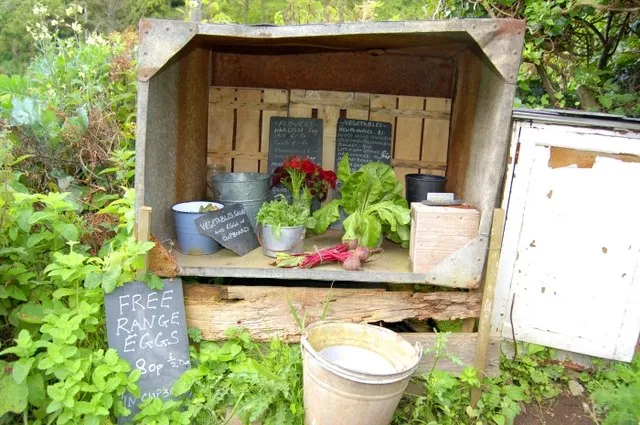
Photo: Mari Buckley, CC BY-SA 2.0, via Wikimedia Commons
November in Cornwall rarely arrives with a slam. It seeps in under the gate: a wet leaf here, a colder wind there, a polytunnel door that suddenly needs closing by four o’clock. By the first week of November 2026, the growers I spoke to were already making small, deliberate moves towards winter. Not grand plans. Rituals.
I asked five of them — a market gardener on the Lizard, a nursery owner near Bodmin, a walled-garden grower outside Hayle, a community allotment organiser in Lostwithiel and a cut-flower grower near Penryn — for one practical job, one mistake worth avoiding and one small pleasure. The result is less a tidy checklist than a set of field notes from the garden gate.
1. Tamsin Rowe, market gardener, Lizard peninsula
Tamsin grows vegetables on a windswept holding where the soil can be warm one day and soupy the next. Her November ritual is what she calls ‘bed burial’. ‘I don’t dig the beds over,’ she says. ‘I fork them just enough to take the weight out, then lay a compost blanket on top and sow field beans where the early crops were. By February the worms have done more than I could with a rotavator.’
Her mistake to avoid? Leaving soil bare because frost supposedly breaks it down. ‘Frost doesn’t structure soil. Rain puddles it. A bare bed on the Lizard is just a pan waiting to happen.’
Her small pleasure is the compost heap after rain. ‘You pull back the tarpaulin and it’s steaming. It sounds ridiculous, but it makes me feel like something is still growing even when the seed packets are put away.’
2. Iwan Penrose, nursery owner, near Bodmin
Iwan’s nursery benches are packed with pots by November, and his ritual is a pot audit. ‘Everything gets lifted onto feet, grouped by how much wet they can take, and the tender stuff gets moved under cover,’ he says. ‘It’s not glamorous. But a pot sitting in a puddle in November is a pot that will rot by January.’
His mistake is overwatering under glass. ‘People think winter means no water, so they ignore the greenhouse. Then you get a mild, still week and everything is damp and airless. Damp plus no air is worse than cold.’ He opens vents on dry days and waters sparingly, not by habit.
His pleasure is a clean label and a sharp pair of secateurs. ‘I know. Very nursery-nerd. But when the light goes early, a tidy bench makes the whole place feel possible.’
3. Gemma Treloar, walled-garden grower, near Hayle
Gemma looks after a walled garden where leaves arrive from the lanes faster than she can sweep them. Her ritual is a leaf-mould cage. ‘We build a simple wire box behind the shed and fill it with leaves from the drive,’ she says. ‘Next autumn it’s crumbly and sweet and goes on the beds. It’s the cheapest thing we do all year.’
Her mistake to avoid is tidying too much. ‘I used to cut everything back. Now I leave seedheads, hollow stems, a few messy corners. The garden looks after its insects and it looks better in a frost.’
Her small pleasure is the first steam off the compost heap on a cold morning. ‘You open the gate and there’s this little cloud. It feels like the garden is breathing.’
4. Rhys Carne, community allotment organiser, Lostwithiel
Rhys oversees a patchwork of plots where everyone has a different idea of November. His ritual is a tool-shed afternoon. ‘We clean, oil, sharpen and mend,’ he says. ‘Then we hang everything where we can see it. It sounds like housekeeping, but it’s really about making the next job easy. A blunt hoe in February is a reason not to go out.’
His mistake is sealing a greenhouse or polytunnel too tight. ‘You want to keep the heat in, so you close every vent and then wonder why everything moulds. Air movement matters more than a degree or two.’
His pleasure is the quiet of an empty plot at dusk. ‘Everyone’s gone home, the robin’s doing its rounds, and you can hear the river. That’s the payment.’
5. Elsie Nancarrow, cut-flower grower, near Penryn
Elsie grows flowers for market and her November ritual is a dahlia check. ‘In Cornwall we can be lazy with dahlias because the ground rarely freezes hard,’ she says. ‘But I still lift the ones in the wettest bed, dry them upside down and store them in crates with dry compost. The rest get a thick mulch and a prayer.’
Her mistake is lifting too early and storing them damp. ‘If you lift them wet and pile them in a shed, you’ve made a dahlia hotel for rot. Wait until the foliage has been knocked back, then dry them properly.’
Her small pleasure is a jar of dried seedheads on the kitchen table. ‘Honesty, teasels, a few alliums. They’re free and they make the dark afternoons feel less bare.’
The common thread
None of these rituals is heroic. That is the point. Cornish growers tend to talk about winter prep as a conversation with the weather rather than a battle against it. Improve the drainage. Lift the pot. Leave the seedhead. Open the vent. Make the next job easy.
And the small pleasures matter as much as the practical jobs. A steaming compost heap, a tidy bench, a robin at dusk: these are the things that make the darker months feel generous rather than gloomy. The garden gate is still open. It just needs a firmer hand on the latch.