Torchlight, Slime Trails and the No-Dig Night Shift: Learning from a Cornish Garden After Dark
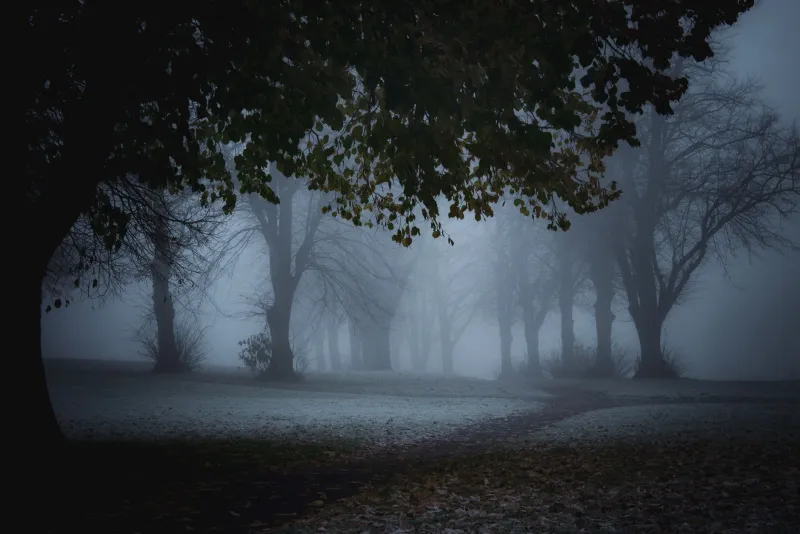
On a damp November evening, the community garden on the edge of Truro does not look like a place of drama. The paths are slick, the hedges are dripping, and the raised beds have the slumped, end-of-season look that makes UK gardeners reach for the seed catalogue rather than the torch. But that is exactly when a small group of volunteers arrives, not with slug pellets, but with red-filtered torches, a notebook and a flask of tea.
“We used to come out at dusk to kill slugs,” says Mara, the volunteer coordinator, pulling her coat hood up against a fine Cornish mizzle. “Now we come out to read the bed. It sounds soft, I know. But we make better decisions in the morning because of what we see at night.”
The case for a later look
Daytime gardening shows you the aftermath. A stripped seedling, a ragged hosta, a row of beans with more holes than leaf. What it rarely shows you is the cast. After dark, the same bed becomes a working landscape of slugs, ground beetles, centipedes, worms, frogs and the occasional wood mouse. The no-dig growers here are not trying to pretend that slugs do not eat crops. They are trying to work out which slugs are eating what, and whether the garden has enough predators to keep the whole thing from tipping.
“A garden after dark is less of a crime scene and more of a shift change,” says Tom, who has gardened this plot for six years. “You see who comes on at night. Some of them are pests. Some of them are pest control. If you only ever look at the damage, you miss the employees.”
What the beam actually picks out
The first discovery is that not every slug is the same slug. The big leopard slugs, with their spotted bodies and slightly unnerving size, are often treated as villains. In fact, they are keen predators of other slugs. The smaller keel slugs and grey field slugs are more likely to be the ones troubling young lettuce. The volunteers do not claim to identify every species perfectly — this is a community garden, not a taxonomy exam — but they have learned to slow down before reaching for a control.
“We used to say ‘slug’ and mean ‘enemy’,” Mara says. “Now we say ‘which slug?’ and ‘where was it?’ and ‘what was it doing?’ That alone has changed how we plant.”
A sheet of cardboard lifted from a damp corner reveals a huddle of ground beetles, dark and quick, and a single frog that seems mildly offended by the interruption. Under a plank near the compost, worms are working the mulch down into the soil. The volunteers record the finds on a clipboard. It is not hard science. It is closer to a nightly roll call.
The no-dig bit
No-dig growing is sometimes sold as a tidy answer to weeds, compaction and soil health. The growers here are quick to say it is not a slug-proof force field. Mulch gives slugs somewhere to shelter. Dense planting gives them cover. A wet Cornish autumn gives them exactly the conditions they enjoy.
But the same mulch and undisturbed soil also support the creatures that eat slugs. Beetles, centipedes, frogs and birds all benefit from a garden that is not scraped bare every weekend. The volunteers have stopped treating every messy corner as a problem.
“We do not tidy the bed to death,” Tom says. “We leave some leaf litter. We do not bury every stem. We keep a few rough edges. The aim is not zero slugs. The aim is a garden with enough mouths to eat them.”
They also pay attention to timing. Watering in the morning rather than the evening gives the surface a chance to dry before the night shift arrives. Sturdy transplants cope better than tender seedlings. Barriers go around the plants that really need them, not around the whole plot as a matter of habit.
A gentler test than ‘pest or not’
The night patrol has changed the way these growers judge a bad week. A few holes in a leaf are no longer an emergency. A slug on a path is not a crisis. A slug on a newly planted seedling is a conversation. The question becomes whether the garden has enough resilience to absorb the damage, and whether a control would do more harm than good.
“It is not that we never intervene,” Mara says. “We just intervene later, and usually less. We have all reached for pellets in the past. Most of us are trying to be a bit more careful now.”
Towards the end of the patrol, the torches pick out a pair of slugs on the rim of a pot and a blackbird already out on the grass, though whether it is hunting or simply commuting is anyone’s guess. The notebook fills with small observations: damp corner, frog, beetles under cardboard, keel slug on lettuce, no damage on the chard. Nothing dramatic. Everything useful.
What changes in the morning
By the next morning, the garden looks much as it did before. The mizzle has moved on, the paths are still wet, and the beds are still full of holes. But the growers who walked the plot after dark are less likely to reach for a quick fix. They are more likely to ask what the garden was doing while they were indoors, and whether the answer is really a problem at all.
For UK gardeners used to judging a border by daylight alone, the lesson is a gentle one. The night shift is not a war council. It is a roll call. And in a damp Cornish garden in November, it turns out there is quite a lot going on after you have put the tools away.