The Slow Cupboard: Turning Cornwall’s Autumn Leaves Into Leaf Mould
November in Cornwall rarely announces itself with a sharp frost. More often it arrives as a soft, grey dampness, a garden still holding its colour while the leaves come down in drifts. One day the beech hedge is intact; the next there is a slippery carpet across the path and a quiet invitation to get the rake out.
Leaf mould is one of those garden jobs that sounds old-fashioned and turns out to be quietly brilliant. It costs nothing, asks very little of you, and produces a dark, crumbly material that improves almost any soil. On Cornwall’s thin, sandy soils — the sort that drain in minutes and blow about in a dry easterly — it is genuinely transformative. It holds moisture, feeds the soil life and gives structure without a bag of fertiliser in sight.
A mild, wet autumn is an advantage — with a caveat
Cornwall’s climate is kind to leaf mould. The county rarely gets the long, hard freezes that stall decomposition further east, and the damp air keeps fungal activity ticking along through winter. Leaf mould is mostly a fungal process, not the hot, bacterial composting you get from a well-built heap of grass and kitchen waste. That is why leaves left in a soggy plastic bag tend to turn into a slimy, anaerobic mess. They need air as much as moisture.
The caveat is simple: in a wet county, drainage and airflow matter more than added water. Site your leaf bin somewhere that does not sit underwater in January, and keep the heap open enough that it can breathe. A bin that is too sealed, too compacted or too wet will sulk. A bin that is airy, damp and left alone will quietly get on with it.
Pick your leaves — and leave plenty behind
Not all leaves are equal. Oak, beech, hornbeam and alder are the classic leaf-mould leaves: they break down steadily and produce a lovely fine crumb. Field maple, lime and fruit-tree leaves are softer and faster. Sycamore and horse chestnut are slower and leatherier, so mix them in rather than making them the whole heap. Evergreen leaves — laurel, holly, conifer needles — should mostly stay out, or go in only in small amounts, as they take far longer and can make the mix acidic and tough.
It is also worth being picky about diseased leaves. Rose leaves with black spot, or fruit-tree leaves with scab, are better cleared away and binned rather than added to a cool leaf heap that will not get hot enough to kill problems. The same goes for leaves that have been sitting in a greasy puddle by a busy road.
And here is the important part: do not rake everything. A garden without leaf litter is a garden with fewer places for wildlife to overwinter. Hedgehogs, frogs, beetles, moths and countless fungi rely on the soft, damp layer under hedges and shrubs. Leave a generous skirt of leaves in borders, under trees and along the wilder edges. Rake the paths, the lawn and the places where leaves smother small plants — then step back.
The four-pallet bin that does the work
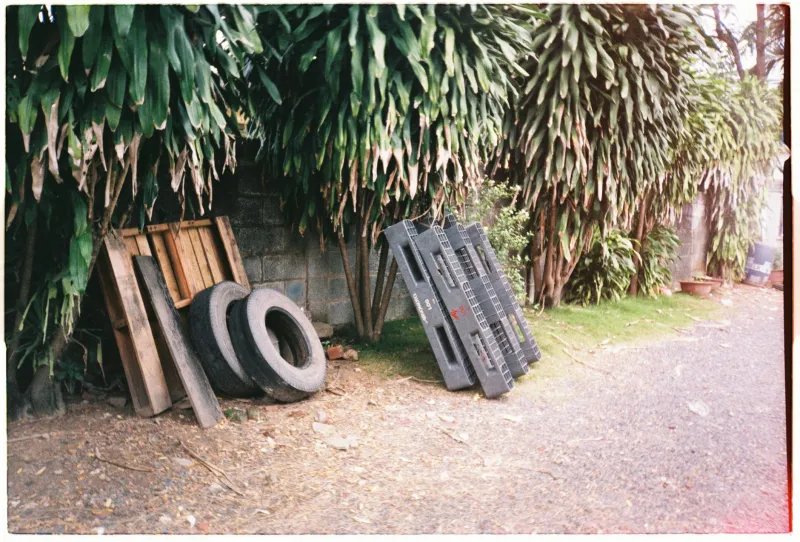
You do not need a fancy contraption. Four pallets tied or wired together into a square is enough, ideally with a couple of corner posts for stability. A metre square is a good size: big enough to hold a decent volume, small enough to manage. Leave the top open and the sides slatted so air can move through. A piece of wire mesh over the top will stop the heap blowing about in a gale, while still letting rain in.
At a community garden on the outskirts of Truro, volunteers have run a leaf-mould bay for years. 'We used to bag everything up and forget it,' says volunteer Maggie. 'Now we build an open bay, tread it once, and let the weather do the rest. The only mistake is making it too tidy.'
That is good advice. Fill the bay with leaves, tread them down lightly as you go — not to compact them into a brick, just to stop the heap blowing away — and leave it. If the leaves are very dry, give them a soaking. If you have grass clippings, add a thin layer now and then, but not so much that the heap turns into a slimy mat. A handful of soil or old leaf mould between layers helps introduce the fungi that do the work.
Two bays are better than one: one for this year’s leaves, one for last year’s batch finishing off. In Cornwall’s mild climate, an open bay will often break leaves down faster than a sealed bag, because it stays damp but not waterlogged and keeps breathing through the winter.
When does it turn into mould?
Patience is the price. Soft leaves such as alder, lime and field maple can be ready in six to twelve months. Oak and beech are slower — expect twelve to twenty-four months, sometimes more if the heap dries out or the leaves are packed tight. You will know it is ready when the leaves have lost their shape, the colour has gone dark brown, the texture is crumbly and the smell is earthy and woodland-like, not sour.
Use it as a mulch around shrubs and perennials, spread over vegetable beds, or sieve it and mix it with sharp sand and garden soil for potting. It is low in nutrients but high in structure, which makes it a excellent partner for Cornwall’s sandy soils. A five-centimetre layer around a young hedge or a new border will do more good than most products you can buy.
The quiet bit
Raking is one of the few garden jobs that cannot really be rushed. The sound of it, the smell of wet leaves, the slow accumulation of a heap that will not be ready for a year or two — it is a gentle sort of gardening. In a county where the growing season can feel almost endless, November offers a chance to slow down and work with what the garden has already made.
So rake the paths, gather the oak and beech, build a scruffy pallet bay and leave the rest for the beetles and the blackbirds. The reward is not immediate, but it is reliable: a slow cupboard of fallen leaves turning into something quietly golden.