Follow Your Nose: A Winter Fragrance Route for Cold, Wet Gardens
Winter fragrance is a funny thing. It can be ten feet away and completely invisible, then catch you as you turn a corner with an armful of soggy cardboard. In a Cornish garden, where damp air hangs about and the wind arrives from several directions before lunch, scent does not spread politely. It pools. It drifts. It hides behind the shed and then ambushes you by the wheelbarrow.
That is why a winter fragrance plan is less about collecting perfumed plants and more about arranging a route. Think of it as a walk you take without thinking: boots by the door, a quick loop past the bins, a pause at the bench, a check on the cold frame. If the good-smelling things are scattered randomly, you will miss most of them. If they sit where you already slow down, they earn their space.
Start at the boot-scraper, not the border
The first stop on any winter scent route is the doorway. Not the front door, necessarily, but the one you use with muddy boots and a sagging coat pocket. This is where scent has to compete with wet laces, dog towels and the general smell of outside. A winter honeysuckle is too big for most porches, but a compact sarcococca or a potted winter box can sit nearby without blocking the step. The point is proximity. You should not have to go looking for perfume while balancing a tray of seedlings.
In our damp Cornish climate, these shrubs need drainage more than cossetting. A pot is useful because it lifts the roots out of a wet winter, but it also dries out faster in a mild spell. Keep the compost honest: bark, grit, a little leaf mould, and no saucer left full of rain. The reward is a low, glossy plant that releases scent on still evenings and mild mornings, exactly when the path is most used.
Let the path do the work
A fragrance route works best when it follows an existing line. Do not build a special perfume walk unless you actually enjoy walking it in January. Use the route to the compost heap, the greenhouse, the hen run or the gate. Then plant the strong, shrubby scent-makers just off that line, so you brush past them or catch their drift without stopping.
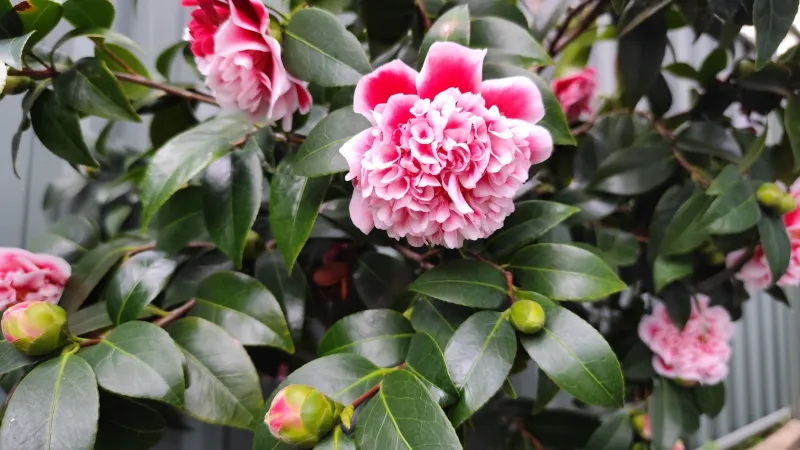
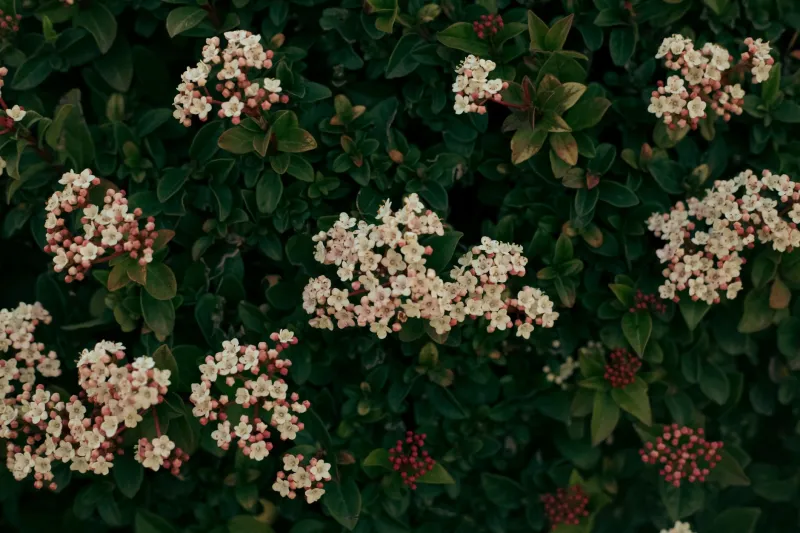
Viburnum bodnantense 'Dawn' is a good example. It is not a tidy plant, and it can look like a bundle of sticks for much of the year, but from late autumn into winter it produces those pink, waxy clusters that carry on cold air. Place it where you pass at shoulder height, not at the back of a deep border. The same goes for Mahonia x media: the yellow racemes are generous, but the plant is prickly and bulky, so give it room beside a path rather than in the middle of a lawn. You want to smell it, not wrestle it.
Use still pockets without making a trap
Cornwall's mild, wet winters can make scent hang in the air, especially on quiet afternoons after rain. But a genuinely still pocket can also be a frost pocket or a soggy one. Watch where the air settles and where the ground stays squelchy. A winter fragrance corner does not need to be warm; it needs to be sheltered enough that the scent is not ripped away, but open enough that the plant does not rot.
A low hedge, a garden wall or a shed can help. So can a change in level. A shrub planted just below a bench will send scent upwards when you sit down. A daphne placed at the top of a short flight of steps will perfume the landing without needing to be brushed. These are small design decisions, but they matter more in winter than in June, when the whole garden is shouting.
Bulbs for the route's quiet stretches
Not every stop needs a shrub. Winter bulbs are brilliant for filling the gaps between bigger scent events. Snowdrops are not loud, but a clump beside a gate can be smelled if you crouch low and the air is damp. Winter aconites and early crocus are more about colour than perfume, but they draw the eye to the ground, which is where winter gardeners spend a lot of time looking anyway.
For something more assertive, try a few pots of Iris unguicularis near a sheltered wall. The flowers are shy and tucked among grassy leaves, but the scent is clean and surprising. Keep the pots close to the door or beside a seat, where the sun can warm the foliage and release the perfume. In a wet year, raise them slightly and keep the crowns clear of mulch.
Prune for the nose, not just the shape
Winter fragrance is often carried on young wood or on flowers that appear before the leaves. That means pruning and placement are linked. A winter honeysuckle that is hacked back hard every year will produce fewer of the small, creamy flowers that scent a whole path. A mahonia that is allowed to become a dark thicket may flower above head height, where only the bees appreciate it.
Aim for a plant you can walk beside, not one you have to peer into. If a shrub has grown too tall, take out a few stems rather than shearing the top. If a climber has run away, train it around a doorway or along a low rail where the flowers sit near nose level. The nose is a lazy instrument. It rewards plants that meet it halfway.
A short route to try this winter
Start at the back door with a pot of winter box. Follow the path to the gate, where a viburnum catches the wind. Pause at the bench under the wall, with daphne or sarcococca within arm's reach. Continue to the cold frame, checking the snowdrops and iris pots on the way. End at the compost heap, because every garden route ends there eventually.
None of this needs a large garden. A few well-placed plants along a route you already use will do more than a collection of fragrant specimens dotted about at random. Winter scent is not a display; it is a series of small encounters. Plan the walk, and the garden will do the rest.